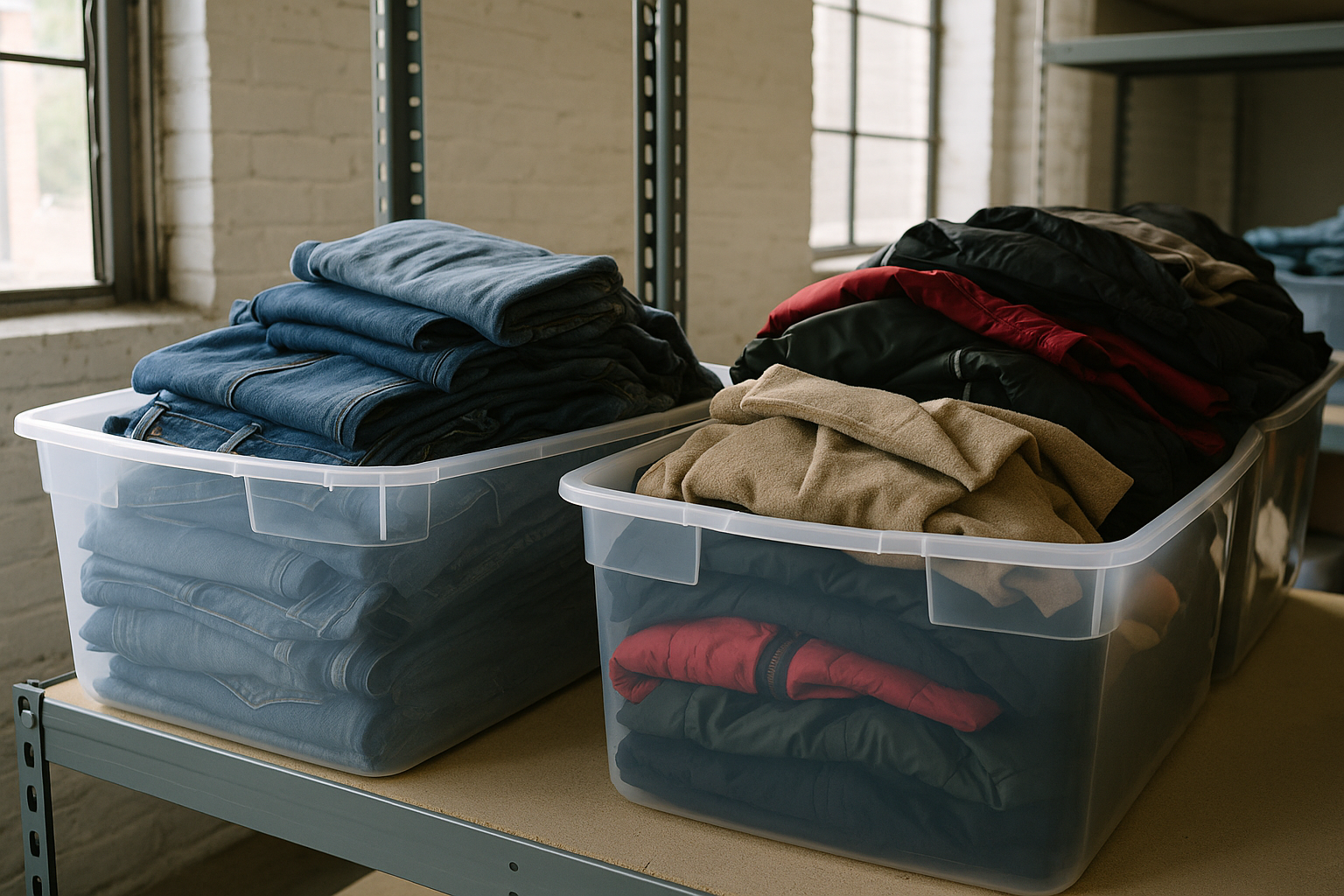
Resellers who pick 2-4 clothing categories and learn them cold consistently out-earn resellers who buy a little of everything. The reason isn't taste. It's throughput. Specialists price faster, list faster, and hold less dead inventory, because they've already answered the questions a generalist has to research on every single item.
We're not saying category focus is the only path to profit. Plenty of full-time flippers run mixed carts and do fine. But if your sell-through is stuck below 60% after 90 days, or your average listing takes 12 minutes because you're Googling brand tiers you don't recognize, the fix usually isn't sourcing more. It's sourcing narrower. This guide walks through how to choose clothing categories to resell, with a test you can run in 60 days.
What "generalist" sourcing actually costs you
Picture a $200 thrift haul: three men's dress shirts, two pairs of women's jeans, a kids' fleece, a vintage tee, and a pair of sneakers. Every one of those items has a different comp pool, a different sizing chart, a different set of eBay item specifics, and a different buyer expectation for condition. You'll spend real time on each one just figuring out what it's worth and how to describe it. A denim specialist doesn't spend that time because they already know their inseam-to-comp shortcuts by heart.
That research tax shows up in three places:
- Listing time. A specialist who's cataloged 300 pairs of the same five denim brands can draft a listing in under 5 minutes. A generalist facing an unfamiliar brand for the first time can burn 20 minutes on research alone.
- Pricing accuracy. Specialists recognize which vintage tee graphics or denim cuts are chase items versus filler. Generalists price by gut feel and either underprice a sleeper or overprice a dud that then sits.
- Return rate. Category familiarity means you know where a garment tends to fail (knees on denim, underarms on knits, soles on sneakers), so you catch defects before a buyer does. Miss that and you eat a return, plus the shipping and the relist.
Here's the math on one slow week. Ten items at 18 minutes each is 3 hours. Ten items at 6 minutes each is 1 hour. At the same average profit per item, the specialist just bought back 2 hours to source, which is where the margin starts.
What clothing sells fastest at thrift-sourced resale
Not all categories move at the same speed once relisted. Sell-through and turnaround vary widely, and the categories that move fastest tend to have the most standardized sizing and the clearest comp data. Both reward specialization. Treat the ranking below as a starting hypothesis, then check it against your own sold data, since regional supply and season shift the order.
- Men's and women's denim from recognizable mid-tier and premium brands. Consistent comps, strong search volume, and buyers who already know their measurements.
- Athletic and outdoor brands (running shoes, fleece, technical jackets). High search demand and styles buyers are actively hunting.
- Graphic and band tees, especially vintage. Thin margins on common graphics, but fast turnaround when the graphic is recognizable.
- Structured outerwear (Carhartt, work jackets, wool coats in season). Slower velocity but high average sale price, which offsets the wait.
- Contemporary women's dresses and separates from mall brands. Steady but price-sensitive; margin depends on rock-bottom sourcing cost.
Kids' clothing, generic basics, and off-brand casualwear consistently sit at the bottom of sell-through for resale. Not because no one buys them, but because the margin per hour spent processing them rarely justifies the bin space. That's the pile that quietly clogs a generalist's shelves.
How to choose clothing categories to resell
Choosing a category focus isn't about picking your favorite department. It's a sourcing-cost-versus-comp-density decision you can test in a few weeks. Follow these steps:
- Pull your last 90 days of sales by category. Sort by net margin per item and by days-to-sale, not just revenue. The highest-revenue category is often not the best margin-per-hour category.
- Calculate net margin per item. Subtract cost basis, eBay final value fee, shipping, and any promoted listing spend from the sale price. Fees vary by category and store tier, so use your actual payout figures.
- Measure average handling time per category. Time yourself sourcing, measuring, photographing, and listing five items in each candidate category. Heavy research overhead (unfamiliar vintage labels, complex suiting) will show up immediately.
- Divide net margin by total minutes per item. This gives margin per hour, the number that actually ranks categories. Example: $28 net on 30 total minutes is $56/hour; $45 net on 90 minutes is $30/hour.
- Check comp density in eBay Sold listings. Search your candidate brands and styles with the Sold filter. Thin, inconsistent comps mean every listing is a pricing guess.
- Match categories to your local supply. A category you can't restock weekly at your usual thrift stores or estate sales isn't a category, it's a one-off.
- Pick 2-4 primary categories, not one. A single category concentrates seasonality risk. Denim plus outerwear plus one fast-turn category (tees or athletic wear) balances velocity against slower, higher-ticket sales.
- Run a 60-day test. Source only within your chosen categories and compare sell-through and margin per hour against your mixed-cart baseline before you commit.
[Screenshot placeholder: FlipDesk category report showing net margin, days-to-sale, and minutes per item]
Specialist vs. generalist, side by side
The gap shows up most clearly in the numbers. These ranges are illustrative, based on throughput patterns we see across small resale operations, not a controlled study. Your own data will differ.
| Metric | Generalist (8+ categories) | Specialist (2-4 categories) |
|---|---|---|
| Avg. listing time per item | 15-20 min | 5-8 min |
| Sell-through rate at 60 days | 45-55% | 65-80% |
| Pricing confidence (comp match quality) | Low to moderate | High |
| Return/dispute rate | Higher: condition surprises more common | Lower: defects known in advance |
| Sourcing decision speed at the rack | Slow: evaluating unfamiliar categories | Fast: pattern recognition on sight |
None of this means a generalist can't be profitable. It means every hour a generalist spends does less work than the same hour spent by someone who's narrowed their focus.
Category focus makes condition grading faster too
Once you specialize, you also get faster and more consistent at the condition side of the job. A denim specialist who's inspected 500 pairs of the same handful of brands knows where whiskering, crotch blowouts, and hem fraying tend to show up, and can sort a rack into Excellent, Very Good, Good, Fair, or Poor in seconds rather than agonizing over each garment.
That consistency matters on the listing side too. Buyers who see the same seller grade honestly within a category start to trust that seller's word, but they trust a standardized report even more. Running your specialty items through GradeThread gives you a numerical grade and a factor-level breakdown across Fabric Condition, Structural Integrity, Cosmetic Appearance, Functional Elements, and Odor & Cleanliness, the same five factors every time, whether the item is NWT, NWOT, or well worn. For a specialist moving volume in one category, that consistency compounds: fewer "not as described" disputes, faster listing copy, and a condition standard buyers start to recognize as reliably yours.
A mixed cart isn't the enemy. An unmanaged one is.
Specializing doesn't mean turning away a great find outside your lane. It means most of your sourcing hours go to categories where you already know the comps, the defect patterns, and the buyer pool. Keep a small opportunistic bucket for the rare underpriced designer piece or obvious flip, and cap it. A workable rule is no more than 20% of purchases. If it creeps toward half your inventory, you're back to generalist economics without realizing it.
Track your category mix quarterly. If a category you added "just to try" is dragging sell-through down and eating listing time out of proportion to its revenue, cut it. The goal isn't fewer sales. It's more margin per hour spent sourcing, listing, and grading.
Try it on your next haul
Before your next sourcing trip, pull your last quarter of sales into a spreadsheet and rank categories by margin per hour, not revenue. Pick your top two. Source only those for one trip and time yourself start to finish. If FlipDesk is already tracking your cost basis and time-to-sale by category, that comparison takes a few minutes instead of an afternoon, and it's the fastest way to see whether specializing would actually move your numbers.