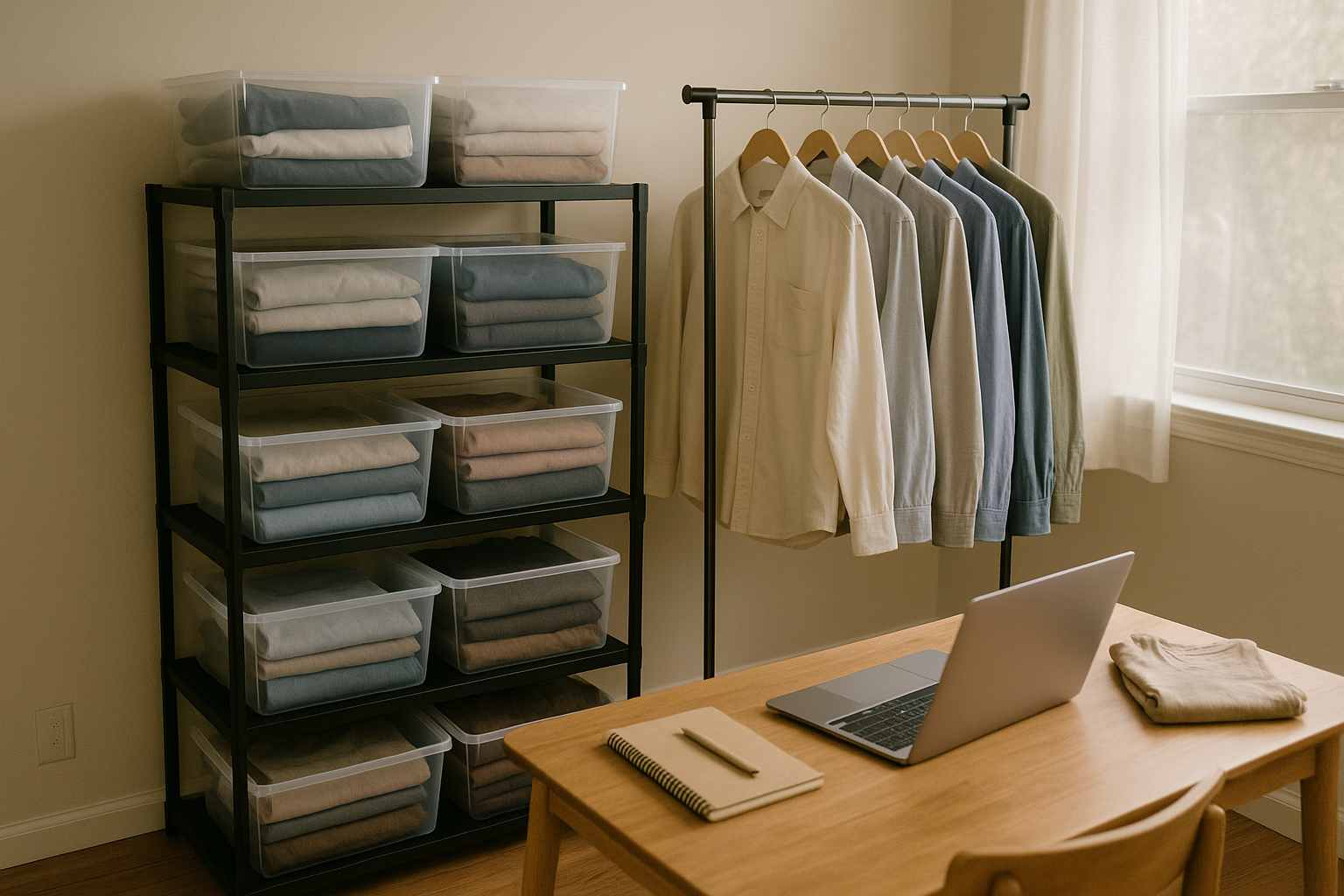
For active resale inventory, meaning the stuff you plan to photograph, list, and ship within 90 days, flat-fold or hanging storage keeps garments closer to their intake condition than vacuum-sealing does. Vacuum bags compress fabric under pressure for weeks at a time. That sets creases into the weave, encourages trapped moisture, and adds steaming time to every order. If your goal is how to store inventory clothing to ship faster, the fastest path is the one that needs the least prep before you box it.
Vacuum-sealing isn't wrong. It's the right tool for the wrong job when resellers use it on sellable stock. It belongs in the dead-storage pile, not the pick-pack-ship pile. Below: the breakdown, the math on what wrinkle damage costs you, and a storage workflow that keeps inventory ship-ready without eating your square footage.
Why Storage Method Is a P&L Line, Not a Housekeeping Choice
Every day an item sits in storage, it accrues holding cost. That's the opportunity cost of cash tied up in COGS, plus a slower, sneakier cost: condition decay. Fabric relaxes, yellows, or creases differently depending on how it's stored. A cotton tee stored flat on a shelf for six months usually looks the same as day one. The same tee vacuum-sealed for six months can come out with sharp fold lines across the chest that may not fully release even after steaming.
That decay matters because it can move a garment down a full condition tier before you ever list it. A shirt that arrived at intake as Excellent, with clean lines and no visible wear, can slip to Very Good after months of bad storage, once Fabric Condition and Cosmetic Appearance take the hit from set-in creasing or fiber stress at the fold points. You bought it at an Excellent price. You're now shipping it at a Very Good grade, which is a lower price point and, if you don't catch the change before listing, a returns risk.
Inventory holding cost and condition decay compound each other. A slow-selling item sits longer, and the longer it sits, the more storage method matters.
What Vacuum-Sealing Actually Does to Fabric
Vacuum bags remove air, which lets you compress a bin's worth of clothing into a fraction of the space. Great for moving apartments. Risky for inventory you need to look clean on demand.
- Structural stress at fold lines. Compression concentrates pressure exactly where the garment is folded. Over weeks, that pressure can weaken fibers along the crease. That's a Structural Integrity concern for delicate knits, silk, and anything with structured shoulders or interfacing.
- Set-in wrinkles. Heavier cottons, linen, and rayon blends are the worst offenders. Vacuum creases are deeper than normal folding creases and often need a full steam-and-stretch pass, not a quick pass with a handheld steamer.
- Moisture risk. If a garment isn't bone-dry before sealing, or the storage area has humidity swings, a sealed bag traps that moisture against the fabric. That's a direct Odor & Cleanliness problem. Musty smell doesn't show up in photos, and buyers flag it in messages and returns.
- Compressed embellishments. Sequins, beading, structured collars, and shoulder pads don't reliably bounce back from months under vacuum pressure. That's Functional Elements damage you often can't steam out.
None of this makes vacuum bags useless. They're built for volume-and-space problems, not for garments you need to pull, photograph, and ship on short notice at their best condition.
Flat-Fold and Hanging: The Reseller Standard
Flat-fold storage in bins and hanging storage on rolling racks both keep garments in roughly the shape they'll be in when you photograph and ship them. The tradeoff is space: bins and racks take more square footage than a stack of compressed bricks.
For most solo and small-team resellers moving 50 to 2000 items a month, that tradeoff is worth it. The time you save not steaming out set-in creases, and the grade points you protect by not letting Fabric Condition and Cosmetic Appearance degrade, usually pay for the extra shelving.
Flat-Fold vs. Vacuum-Seal at a Glance
| Factor | Flat-Fold / Hanging | Vacuum-Seal |
|---|---|---|
| Space efficiency | Low: needs bins, shelving, or rack space | High: compresses roughly 4-6x in volume |
| Wrinkle risk | Low with proper folding | High: deep, set-in creases |
| Pre-ship prep time | Minutes: quick steam or none | 10-20 min per item for stubborn creases |
| Odor risk | Low with breathable bins | Moderate-high if not fully dry before sealing |
| Best for | Active sellable inventory (0-90 days to ship) | Off-season dead stock, bulk lots awaiting sort |
| Structural risk to delicate items | Low | Moderate: knits, silk, structured pieces |
Treat the prep-time and compression figures as working estimates. They vary by fabric, bag quality, and how long the item sits. Time a handful of your own items to get your real numbers.
Prevent Wrinkles in Inventory Storage: Fabric-by-Fabric Notes
Not every garment needs the same treatment. Match the method to the fabric and you cut steaming time without buying more shelving than you need.
- Cotton tees and jersey knits: Flat-fold in short stacks. They tolerate bins well and release creases easily.
- Denim: Fold or roll. Denim hides creases well, so it's the best candidate for dense bin storage.
- Linen and rayon: Hang when you can. These wrinkle fast and hold creases the longest.
- Wool and heavy knits: Fold flat, never hang, since hanging stretches shoulders. Keep them dry and breathable.
- Silk, satin, and structured blazers: Hang on padded or wide-shoulder hangers. Don't stack anything on top.
- Embellished pieces: Store flat in a single layer or hang. Don't compress them.
The Hidden Labor Cost of Wrinkle Damage
Example math: say you handle 40 items a day. If vacuum-sealed stock adds an average of 8 extra minutes of steaming per item versus flat-fold stock, that's 320 minutes a day. Even if only one in five of your items is affected, that's about 64 minutes a day, or over 5 hours a week, spent undoing storage damage instead of listing new inventory. At a modest $20/hour value on your own time, that's $100+ a week, or roughly $5,000 a year, burned on a problem the storage method created.
That's the best case, where steaming fully resolves the crease. When it doesn't, and the fold line stays visible in photos, you're downgrading the listed condition tier, disclosing the flaw and taking a lower offer, or risking a not-as-described return when a buyer sees a crease you didn't disclose. A return also costs you outbound shipping, possibly return shipping, and the fees you may not get back, so one missed crease can erase the margin on several clean sales.
A Storage Workflow That Keeps Inventory Ship-Ready
Use this sequence for any garment you expect to list within the next 90 days:
- Confirm the garment is completely dry and odor-free before it goes into any storage container. Damp or lightly worn items go to laundering first, not storage.
- Fold structured items (button-downs, blazers, sweaters) along their natural seams, not across the body, to avoid new stress creases.
- Hang anything prone to fold damage, such as silk, structured jackets, or anything with shoulder padding, on slim, non-slip hangers rather than folding it into a bin.
- Store folded items no more than 3-4 garments deep per stack inside a bin so lower items aren't compressed under weight.
- Use breathable bins or add a desiccant pack in humid climates, and avoid sealing garments in airtight plastic.
- Label each bin with its SKU range or category so you can pull an item without unstacking the whole bin.
- Keep storage in a climate-stable area. Avoid attics, garages, or anywhere with humidity swings that invite mildew or Odor & Cleanliness issues.
- Re-check high-value or long-hold items every 30 days for new creasing, and re-fold or re-hang as needed instead of letting a crease set for months.
- Before listing, do a final visual pass against the five grading factors (Fabric Condition, Structural Integrity, Cosmetic Appearance, Functional Elements, and Odor & Cleanliness) to confirm the garment still matches the grade you recorded at intake.
[Screenshot placeholder: FlipDesk inventory view showing bin location, intake grade, and last re-check date per item]
That last step is the one most resellers skip, and it protects your price realization. A grade recorded at intake and never re-checked is a grade you're guessing at by the time the item ships three months later.
Bulk Clothing Storage Without Damage: Matching Method to Hold Time
Hold time is the simplest decision rule. Sort stock into three buckets and store each one accordingly.
- 0-90 days (active): Flat-fold or hanging, labeled by SKU and easy to pull.
- 90-180 days (slow): Flat-fold in breathable bins, with a 30-day re-check on higher-value pieces.
- 180+ days (dormant): Vacuum-seal only durable, fully dry items. Skip delicates, embellished pieces, and structured garments.
If an item has sat in the slow bucket twice as long as you planned, that's a pricing or listing problem, not just a storage one. Reprice it or relist it before condition decay eats the margin.
When Vacuum-Sealing Actually Makes Sense
Vacuum bags earn their keep in three specific situations:
- Off-season bulk you won't touch for 6+ months. Winter coats sourced in July, summer dresses sourced in December: anything with a long runway before it's relevant to list.
- Bulk lots awaiting sort. If you buy pallets or grab bags and haven't graded or catalogued the contents, vacuum-sealing the unsorted overflow is fine, since you're not shipping directly from that pile.
- Space-constrained storage units. If you pay for offsite storage by the square foot, compressing genuinely dormant stock cuts your monthly rent, as long as you're not actively pulling from it.
The rule of thumb: if an item could be listed and shipped within the next quarter, keep it flat-fold or hanging. If it's realistically dead stock for half a year or more, vacuum-seal it and plan for a steam pass when it comes back out.
Where This Meets Your Grading Records
Storage condition decay is exactly the kind of drift that standardized grading is built to catch. If you log a Fabric Condition and Cosmetic Appearance snapshot at intake, a quick re-grade before listing tells you whether three months in a bin changed anything, instead of finding out from a buyer's return request. It's a smaller version of the problem GradeThread solves for buyer-facing listings: a documented, dated condition record beats a seller's memory of what an item looked like when it came in.
If you're not sure whether your storage setup is quietly costing you grade points, pull the five items that have been sitting longest and grade them against your intake notes. The gap, if there is one, tells you what your storage method is doing. Try it on your next batch in FlipDesk before you decide whether flat-fold, hanging, or a mix is right for your space.